Home Blog Page 37

Metaverses Attract $120 Billion

0

The Metaverse, a virtual world where people can interact and participate in various activities, has captured the attention of consumers and executives alike. A recent McKinsey survey shows that over $120 billion has already been invested in the Metaverse, more than double the amount invested in 2021. The study also found that 95% of business leaders believe the metaverse will have a positive impact on their industry in the next 5-10 years.

According to a recent McKinsey survey of 3400 consumers and executives, $120 billion has already been invested in the Metaverse by Corporations, VC, and PE in 2022, more than double the $57 billion invested in all of 2021.20 A large part of it is driven by Microsoft’s planned acquisition of Activision for $69 billion. The study also found that 95% of business leaders expect the metaverse to have a positive impact on their industry within five to ten years, and 61% expect it to moderately change the way their industry operates.

Consumers and brands are already engaging

McKinsey estimates Metaverse to have a market impact of $5 trillion by 2030:

  • Between $2 trillion and $2.6 trillion on e-commerce
  • $180 billion to $270 billion on the academic virtual learning market
  • $144 billion to $206 billion impact on the advertising market
  • $108 billion to $125 billion impact on the gaming market

The main reason that NFTs and Metaverses are important for institutional investors, is that consumerled marketing is a growing and powerful method for reaching customers. Brands and projects that activate consumer-led and personalized marketing will have more engagement and higher conversion rates. Since these assets are on the blockchain, investors can earn real ROI by understanding which NFTs and Metaverses will go viral.

The Metaverse is expected to have a significant market impact in the coming years, with McKinsey estimating its value to be around $5 trillion by 2030. The growing trend of consumer-led marketing and the rise of NFTs have made the Metaverse an attractive investment opportunity for institutional investors. With real returns on investment possible through understanding which NFTs and Metaverses will become popular, the Metaverse is a space worth paying attention to.

This article is an extract from the 70+ page Institutional Demand for Cryptocurrencies Survey co-published by the Crypto Research Report and Cointelegraph Consulting, written by multiple authors and supported by Flow Trader, sFox, Zeltner & Co., xGo, veve, LCX, Finoa, Lisk, Shyft, Bequant, Phemex, GMI.

What Professional Investors think of NFTs

0

Institutional investors have always been a driving force in the crypto market and it’s no surprise that they are primarily holding Bitcoin and Ether. However, as the market for NFTs has grown, institutions are also showing interest in security tokens, stablecoins, and other digital assets. This blog post will explore the current sentiment of institutional investors towards NFTs and what we can expect to see in the future.

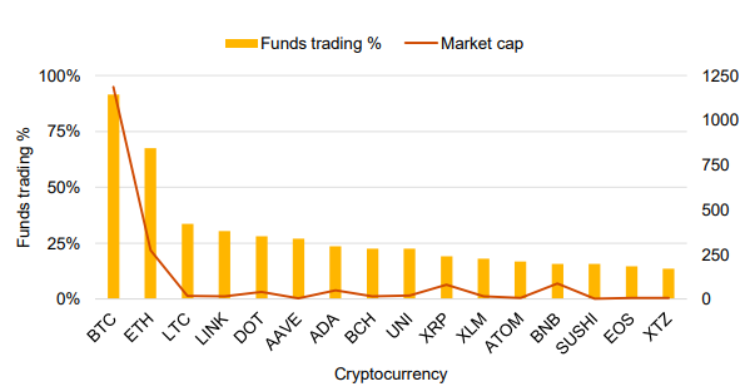
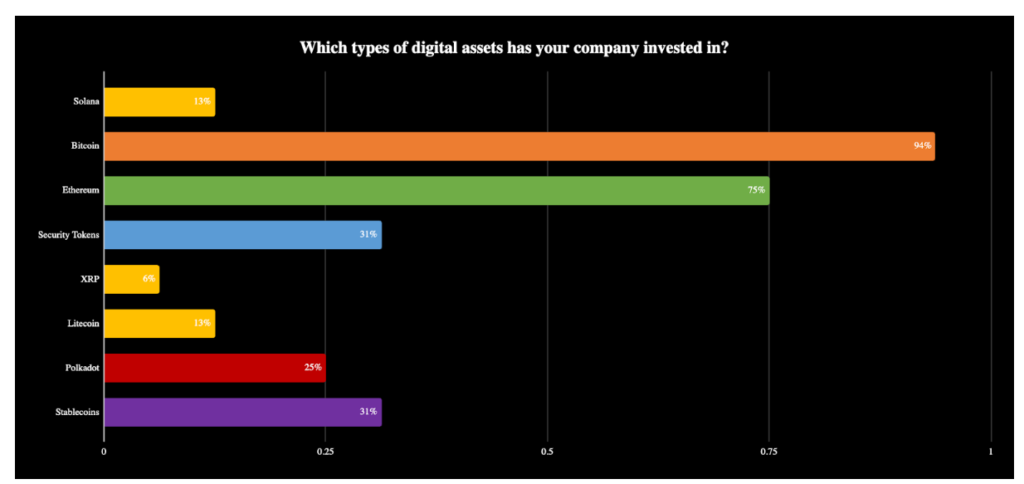
It should come as no surprise that professional investors are primarily holding Bitcoin (94%) and Ether (75%). In addition to the two top digital assets when measured by market capitalization, institutions are also interested in security tokens (31%) and stablecoins (31%). Smaller holdings included Polkadot (DOT) (25%), Solana (SOL) (13%) and Litecoin (LTC) (13%). Several investors mentioned they are also interested in publicly traded blockchain stocks. 

Source: Cointelegraph Research

When Visa bought a CryptoPunk NFT in August 2021, the purchase created a lot of waves. The company stated that it saw NFTs as a “promising medium for fan engagement.”

Top-tier auction houses Sotheby’s and Christie’s featured eight-figure NFT auctions as the market for natively digital art with blockchain-proofed ownership heated in the summer of 2021. Sotheby’s natively digital auction line featured NFTs from Pak, LarvaLabs and Xcopy, while Christie’s sold Beeple’s “Everydays: The First 5000 Days” for $69 million and curated its “Encrypted” digital art series.

But not all institutions are bullish on NFTs. When ConstitutionDAO, an ad-hoc group of private investors, tried to purchase an original copy of the United States constitution, it was outbid by hedge fund titan Kenneth Griffin. ConstitutionDAO raised $47 million from private investors at an average contribution of just $217. But the transparent nature of its efforts meant that other bidders knew exactly how high it could bid.

We see future NFT demand by institutional investors to fall into two categories:

  1. Acquisition of “blue-chip” NFT projects, similar to Visa’s purchase of a CryptoPunk.
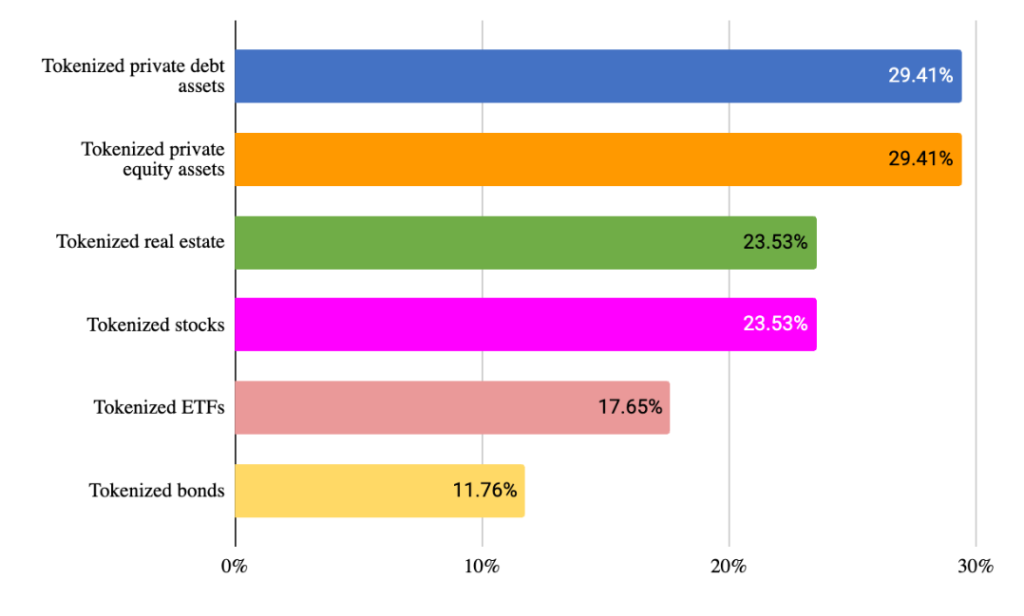
  2. NFTs as certificates of ownership of other underlying assets. 

Number two has been spearheaded by Uniswap, where a user receives an NFT representing their liquidity position. Since some liquidity providers can be extremely profitable, these “utility NFTs” can represent ownership of a yield-bearing asset. 

Overall, the interest and sentiment of institutional investors for NFTs is positive. However, without a solid regulatory framework and likely without deeper liquidity and more sophisticated instruments, institutions will not invest heavily in NFTs.

Source: Cointelegraph Research

The interest and sentiment of institutional investors towards NFTs is positive, but without a solid regulatory framework and deeper liquidity, institutions will not invest heavily in them. We expect to see institutions acquire “blue-chip” NFT projects and use NFTs as certificates of ownership of other underlying assets. The future of NFTs is promising, but it will take time and development before they become a mainstream investment option for institutions.

This article is an extract from the 70+ page Institutional Demand for Cryptocurrencies Survey co-published by the Crypto Research Report and Cointelegraph Consulting, written by multiple authors and supported by Flow Trader, sFox, Zeltner & Co., xGo, veve, LCX, Finoa, Lisk, Shyft, Bequant, Phemex, GMI.
Reasons Why Institutions Are Buying Cryptocurrencies

0

As digital assets continue to grow in popularity, asset managers around the world are increasingly interested in understanding the best approaches for investing in these new types of assets. A recent survey reveals that risk-return ratio is the most important factor for allocating assets to digital investments and that clients requesting such investments are not a major influence. In this article, Thomas Zeltner – an experienced investor with a portfolio containing cryptocurrencies – shares his insights on why he decided to invest part of his assets into crypto and how his team allocates resources accordingly.

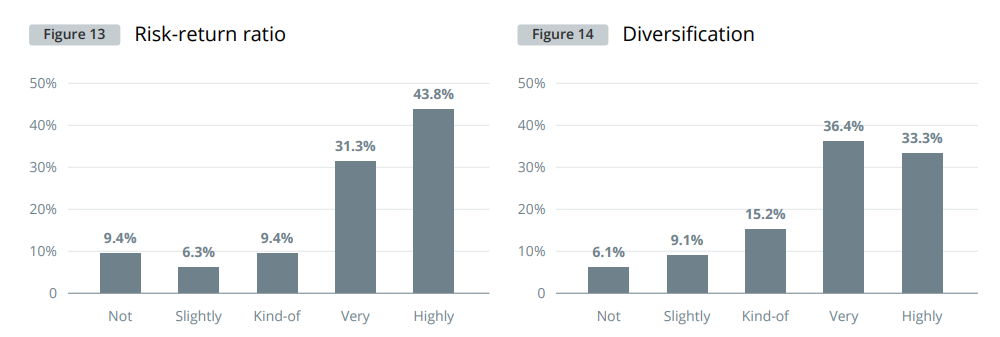
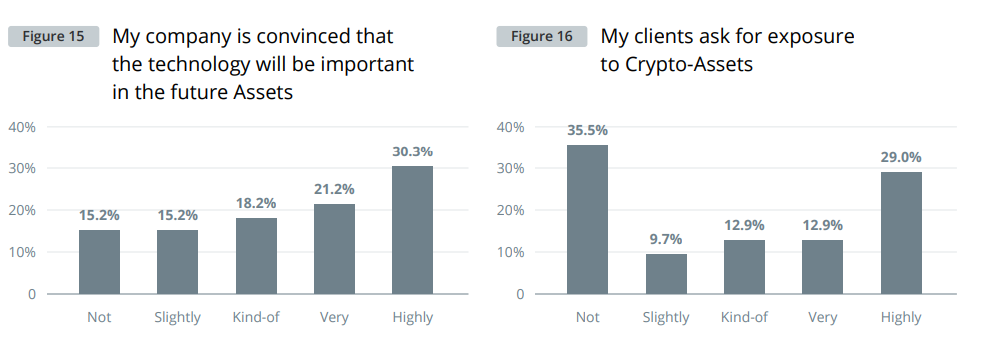
According to the survey results, the most important consideration for investing in digital assets is their risk-return ratio as 44% of respondents rated this characteristic as “highly important.” Most of the responses to “diversification” and “my company is convinced that the technology will be important in the future” are clustered in the middle and slightly skewed to the right of the importance spectrum, meaning that these factors are moderately important. Notably, the survey shows that clients requesting digital assets are not very relevant to the asset managers’ decision to invest in these assets.

Source: Cointelegraph Research

Why did you decide to allocate part of your family assets to cryptocurrencies?
Thomas Zeltner:
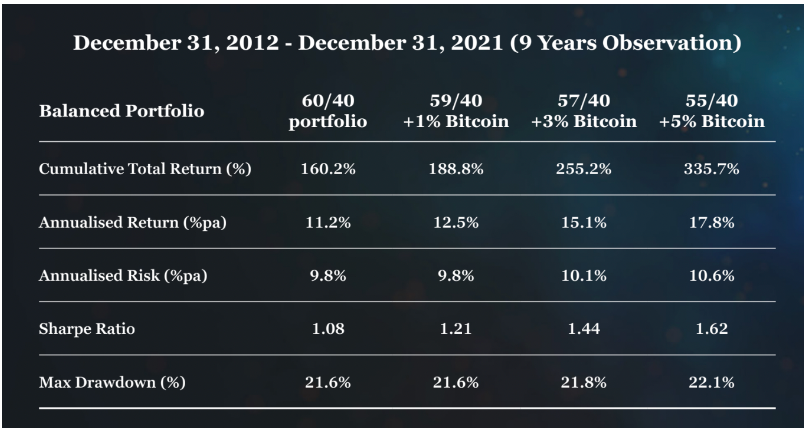
First of all, a 2–3% allocation to Bitcoin in a standard 60/40 portfolio would have increased its Sharpe Ratio significantly. Secondly, cryptocurrencies are a unique diversification opportunity. And finally, every family should invest some of its assets in future technologies.

How do you allocate assets to crypto?
Thomas Zeltner:
We weren’t happy with the solutions on the market, as we were looking for active solutions managed by fund managers we trust and at a fair cost. So, we created our own actively managed certificate and hired Demelza Hays, an excellent crypto portfolio manager who we trust and has a fantastic track record. In addition, we needed a bankable product to ensure a scalable process across all our clients’ portfolios.

What percentage of their portfolios should professional investors allocate to invest in crypto?
Thomas Zeltner:
This really depends on the personal risk profile and the market outlook. Our peers usually allocate less than 1% or even 0% to the crypto market, while we recommend between 3% and 7% depending on multiple factors. We currently view cryptocurrencies as neutral, but increasingly bullish. We are, therefore, allocating 5%.

Source: Cointelegraph Research

How does your crypto portfolio management work?
Kim Wirth:
Our performance is a combination of cryptocurrency exposure, staking rewards and premium generation from market-neutral derivative strategies. We follow a coresatellite approach where we invest in large coins, like Bitcoin or Ether, as our core and various smaller altcoins as our satellite. In addition, we apply an actively managed rebalancing strategy that has been designed to exploit cryptocurrency volatility while reducing risk and maximizing the long-term upside.

What coins are you investing in?
Kim Wirth:
We currently diversify across three categories. Layer-1 and layer-2 coins as well as exchange cryptocurrencies. We also trade derivatives to implement certain strategies, such as hedges.

How do you manage the risks of crypto exposure from a portfolio point of view?
Kim Wirth:
To start with, the crypto product itself can go market neutral or even short if we are bearish. In addition, we optimize our tactical weights for the crypto exposure to manage our overall portfolio volatility. In addition to this, rebalancing is still one of the most powerful tools when used correctly.

How does your cryptocurrency research work?
Kim Wirth:
We have a bottom-up approach, which we use to generate a pool of coins and projects which are reliable and promising from our point of view. We then track these coins by using quantitative signals to decide when to buy and when to sell. On top of this pool and these signals, we draw a macroeconomic picture of the world to decide whether we are bullish or bearish on the overall crypto market. This is where we decide what percentage we will allocate within the predefined pool of coins and how much we will invest in the market-neutral strategies consisting of futures and options.

It is clear that when it comes to digital investments, investors must carefully consider their risk-return ratio and diversification opportunities before making a decision. Furthermore, having trusted fund managers who have a good track record can help ensure successful allocation of resources. There is no one-size-fits-all approach as every family’s needs are different. However, taking these factors into account can help families make educated decisions when investing their money into digital assets like cryptocurrencies.

This article is an extract from the 70+ page Institutional Demand for Cryptocurrencies Survey co-published by the Crypto Research Report and Cointelegraph Consulting, written by multiple authors and supported by Flow Trader, sFox, Zeltner & Co., xGo, veve, LCX, Finoa, Lisk, Shyft, Bequant, Phemex, GMI.

Perception of Cryptocurrencies Among Institutions

0

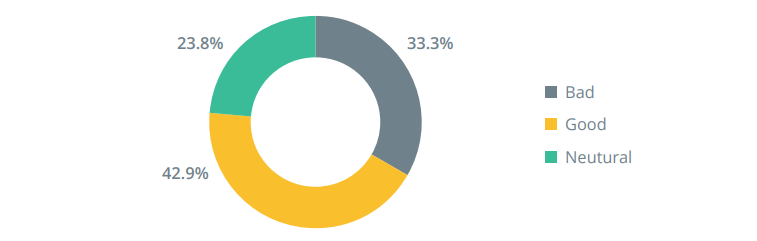
Cryptocurrency has been a topic of much debate in the investment community. While some see it as a valuable asset class, others still view it with skepticism. A recent survey of institutional investors revealed some interesting insights into their perception of crypto assets.

When asked about their perception of crypto assets, a strikingly large percentage of respondents reported a negative view. Unlike other asset classes, there appears to be a strong anti-cryptocurrency strain held by some professional investors.

What Is Your Perception of Crypto Assets?

Source: Cointelegraph Research

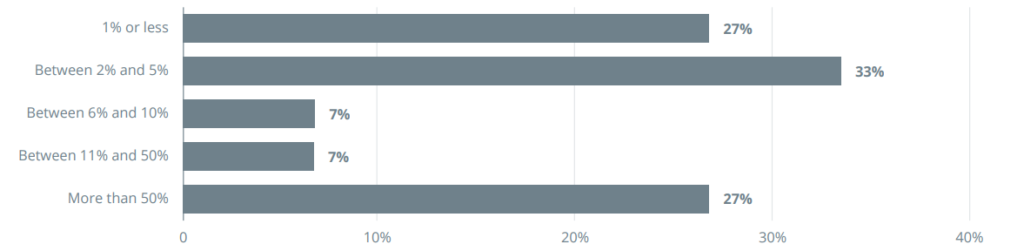
Among the institutional investors who have had exposure to digital assets, 60% of the respondents have 5% or less of their assets under management in crypto assets. Notably, over a quarter of those surveyed have only 1% or less of their AUM in crypto assets.

What Percentage of Your Company’s Assets Are Invested in Crypto Assets?

Source: Cointelegraph Research

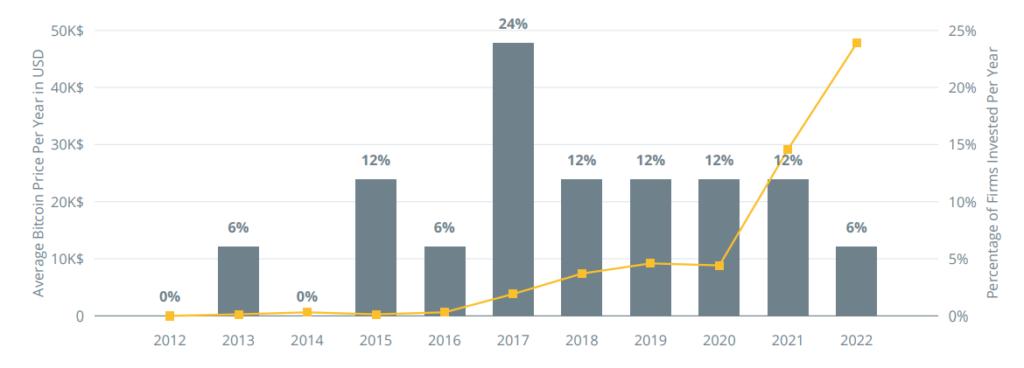
When Did Institutional Investors First FOMO Into Cryptocurrencies?

Nearly a quarter of investors gained exposure to digital assets for the first time during the 2017 bull market. Only 6% of those surveyed invested in crypto assets in 2022 — after Bitcoin’s all-time high on April 14, 2021, when the price was almost $64,000 per coin and Bitcoin had a $1.18-trillion market capitalization.

What Was the First Year Your Company Invested in Digital Assets?

Source: Cointelegraph Research

The survey results indicate that institutional investors have a mixed view of crypto assets, with many allocating only a small percentage of their assets under management to them. Additionally, the majority of institutional investors first gained exposure to digital assets during the 2017 bull market, with very few entering the market after the all-time high in 2021. Despite these findings, it’s important to remember that the crypto market is still relatively new and perceptions may change as the industry evolves.

This article is an extract from the 70+ page Institutional Demand for Cryptocurrencies Survey co-published by the Crypto Research Report and Cointelegraph Consulting, written by multiple authors and supported by Flow Trader, sFox, Zeltner & Co., xGo, veve, LCX, Finoa, Lisk, Shyft, Bequant, Phemex, GMI.
Institutions Account for over 70% of Coinbase’s Trading Volume

0

The adoption of cryptocurrency by institutional investors has been a hot topic in recent years. While it can be difficult to accurately track the involvement of institutional investors in the cryptocurrency market, certain exchanges and data sources provide insight into their activity. In this article, we will examine the trend of institutional investment in cryptocurrency using data from Coinbase and IntoTheBlock.

As most of on-chain trading is rather opaque due to the nature of crypto wallets, one has to refer to proxies to grasp the relevance of institutional investors. Coinbase for instance publishes trading volume for all assets traded on its platform by type of investor.

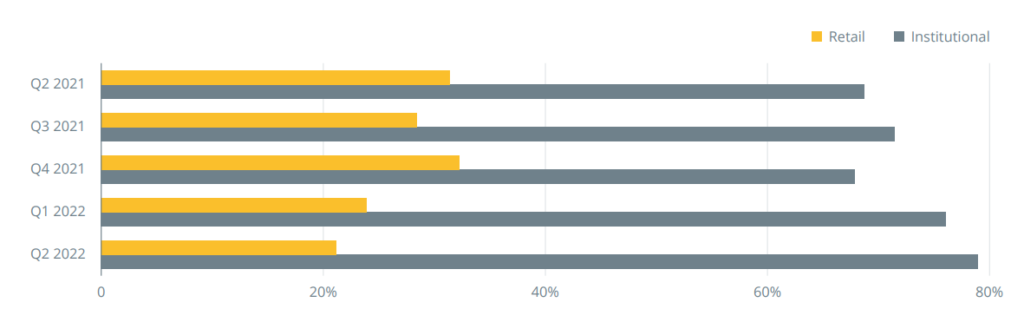
Looking at the share of trading volume, which stood at $217 billion in Q2 2022, one can see that the share of trading volume associated with institutional investors has increased from 68.6% in Q2 2021 to 78.8% in Q2 2022.

Trading Volume on Coinbase

Source: Coinbase Shareholder Letter Q2 2022

This is an increase of 10.2 percentage points in one year. Although this is just evidence from one of the largest exchanges, it might well be seen as exemplary for the whole sector.

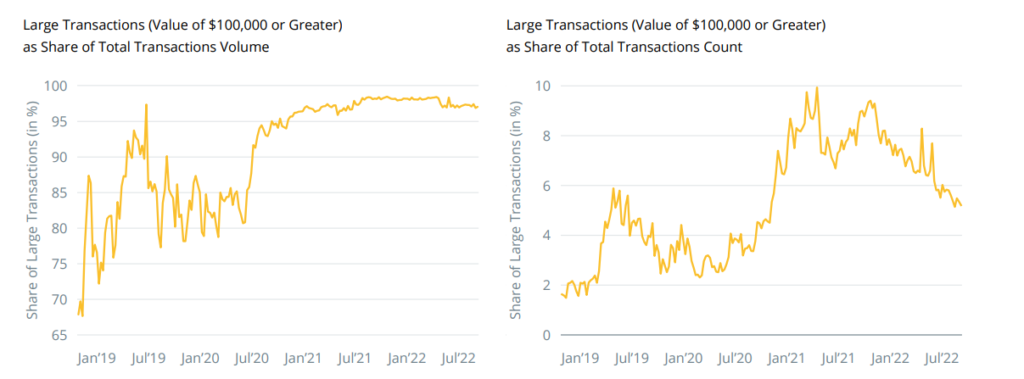
Other sources, such as IntoTheBlock, also refer to the share of large transactions defined as transactions with a volume greater or equal $100,000 as a proxy for institutional activity.

Large Transactions in the Bitcoin Network

Source: IntoTheBlock, Cointelegraph Research

Looking at these numbers, one can see that although large transactions make up less than 10% of total transactions, their volume accounts for up to 99% of total transaction volume.

In conclusion, the data suggests that institutional investors have significantly increased their involvement in the cryptocurrency market. This trend is evident through the rising share of trading volume associated with institutional investors on Coinbase and the high volume of large transactions in the Bitcoin network. These findings demonstrate the growing interest and adoption of cryptocurrency by institutional investors.

This article is an extract from the 70+ page Institutional Demand for Cryptocurrencies Survey co-published by the Crypto Research Report and Cointelegraph Consulting, written by multiple authors and supported by Flow Trader, sFox, Zeltner & Co., xGo, veve, LCX, Finoa, Lisk, Shyft, Bequant, Phemex, GMI.
Top 10 Largest Institutional Cryptocurrency Investors

0

The adoption of cryptocurrencies by institutional investors, such as pension funds, insurance companies, and asset managers, is an important development in the crypto space. In this article, we will examine the extent to which cryptocurrency holdings and trading volume are dominated by retail or institutional investors.

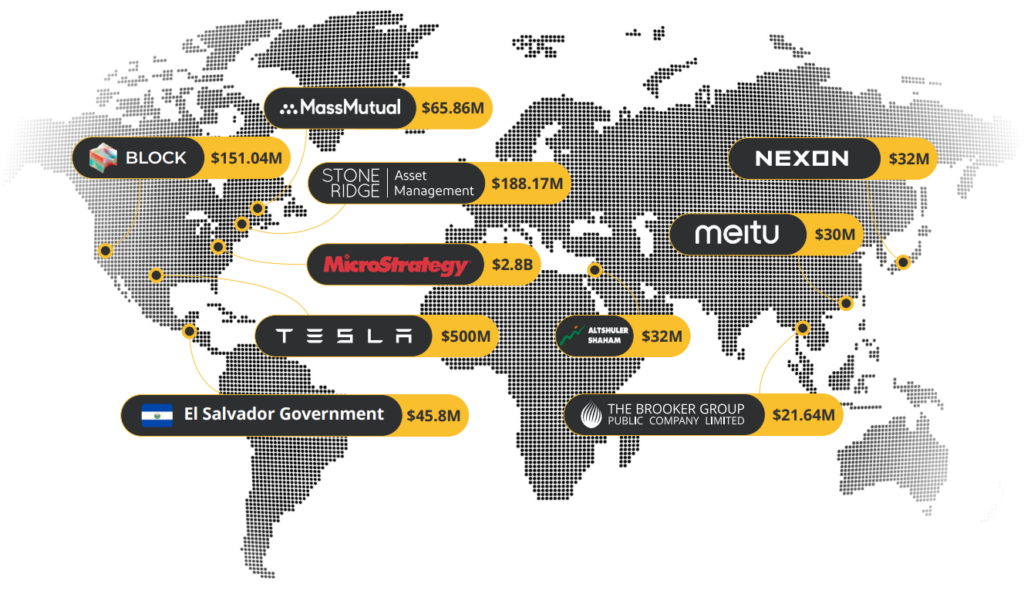
The target group for blockchain-inspired financial products includes pension funds, insurance companies, university endowments, high-net-worth individuals, family offices, asset managers, banks and funds of funds from around the world. For Cointelegraph’s list of the world’s top 10 largest institutional cryptocurrency investors, we focus on TradFi companies that have disclosed their cryptocurrency holdings.

Map of Largest Institutional Cryptocurrency Investors

Source: Cointelegraph Research

An important question in the context of cryptocurrency adoption is to what extent holdings and trading volume are dominated by retail investors or institutional investors. As more activity from institutional investors demonstrates a mainstream adoption of cryptocurrencies, observers of the crypto space have a keen eye on this development. 

Institutions Hold 1.39 million+ BTC

Identifying the holder of a particular crypto wallet is a challenging task. While some large wallets may belong to (individual) whales, other large wallets may belong to crypto exchanges and thus represent the holdings of many investors, retail and institutional. One crypto exchange may also own several distinct wallets. Hence, distinguishing between retail and institutional holdings is inaccurate at best. 

“It’s a great speculation. I’ve just got something over one percent of my assets in Bitcoin. Maybe it’s almost two. That seems like the right number right now. Every day that goes by that Bitcoin survives, the trust in it will go up….I am not a hard-money nor a crypto nut. At the end of the day, the best profit-maximizing strategy is to own the fastest horse… If I am forced to forecast, my bet is it will be Bitcoin.”

Paul Tudor Jones, Founder of Tudor Investment Corporation

Popular outlets such as bitcointreasuries.net estimate the total number of Bitcoins held by public companies, private companies, governments, and other funds to be around 1.39 million BTC. Given the total number of Bitcoins mined, this would amount to a share of roughly 7.2%. Naturally, this is a rough estimate as there may be more Bitcoins in certain wallets belonging to institutional holders. Thus, these numbers may be seen as a lower bound for institutional holdings. Given that the numbers only refer to Bitcoin, holdings for the entire crypto sector might look differently.  

It is difficult to accurately distinguish between retail and institutional holdings in the cryptocurrency market due to the challenges of identifying the owner of a particular crypto wallet. Despite this, the increasing interest and investment from institutional investors in the crypto space demonstrates the mainstream adoption of cryptocurrencies.

This article is an extract from the 70+ page Institutional Demand for Cryptocurrencies Survey co-published by the Crypto Research Report and Cointelegraph Consulting, written by multiple authors and supported by Flow Trader, sFox, Zeltner & Co., xGo, veve, LCX, Finoa, Lisk, Shyft, Bequant, Phemex, GMI.

Comparing Crypto Surveys among Professional Investors

0

Over the last year we have seen legislation waking up to the promises and dangers of blockchain technology and hope that they can provide clarity and guidance that enables innovation while protecting investors and consumers. The importance of this can also be seen in additional important surveys that were made about the crypto industry in the last couple of years and that we have not taken a look at in last weeks article.

The third report we want to include is the State Street Digital Assets Survey from October 2021. The report finds that:

  • 82% of respondents are allowed to hold digital assets.
  • 21% actually hold them, although most plan to increase their exposure.
  • 56% expect cryptocurrencies to be common in modern portfolios within the next three years.
  • Asset holdings are driven by smaller funds. Sovereign wealth funds are mostly prohibited from investing.
  • Similar to the PwC report, funds prefer direct holdings for unleveraged long positions.
  • Custodial solutions are the most important building block for respondents because cybersecurity concerns are paramount blockers.
  • Decentralized finance (DeFi) and nonfungible tokens (NFT) are seen as the biggest drivers of disruption. 
  • 52% believe blockchains will enable real-time settlement in the financial markets at large.

Finally, the Bitwise/ETF Trends 2022 Benchmark Survey of Financial Advisor Attitudes Toward Crypto Assets report features some very promising indicators:

  • 94% of financial advisors received questions about crypto from clients.
  • 47% of advisors reported holding digital assets for themselves.
  • Client accounts with digital assets in them grew from 9% to 16%.
  • Crypto equities like Coinbase stock trumped the list of investments (46%), with Bitcoin (45%) and Ether (41%) not far behind.
  • 60% reported regulatory concerns as the biggest deterrent.
  • 53% viewed crypto as too volatile. 
  • 34% had trouble with applying valuation methodologies to digital assets.
  • Apart from regulation, 46% said that better custodial solutions would make them reconsider digital assets.
  • 44% wanted a spot-based ETF to invest in.
Source: Cointelegraph Research

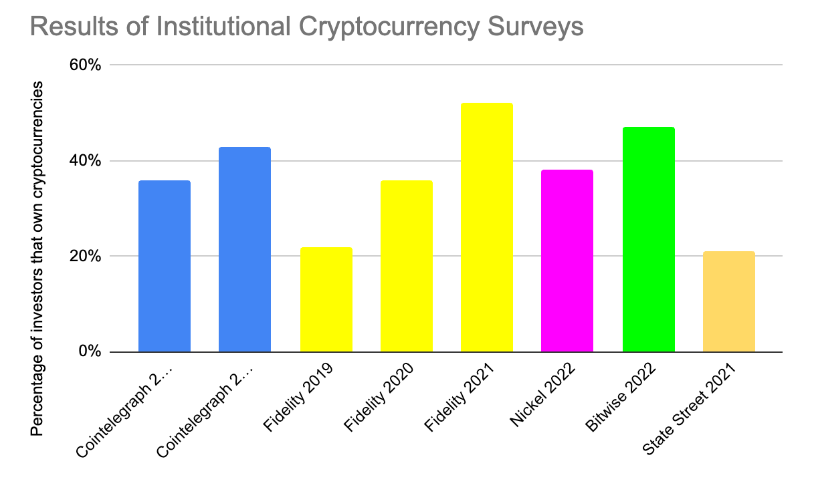
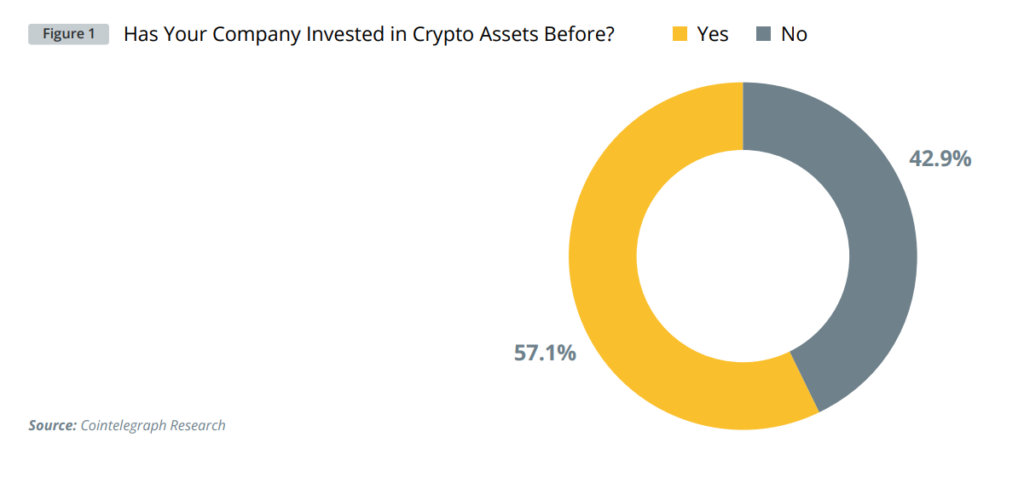
Comparing the results of the 4 surveys done in 2022 on professional investment in cryptocurrencies, 45% of institutional investors have exposure to digital assets. If there’s a common ground among these reports, it is that concise regulation and good custodial solutions would unlock investments on a massive scale. These two are clearly correlated, as custodians have some legal responsibility and are likely waiting for clarity themselves.

This article is an extract from the 70+ page Institutional Demand for Cryptocurrencies Survey co-published by the Crypto Research Report and Cointelegraph Consulting, written by multiple authors and supported by Flow Trader, sFox, Zeltner & Co., xGo, veve, LCX, Finoa, Lisk, Shyft, Bequant, Phemex, GMI.
How many Institutional Investors own Cryptocurrencies?

0

According to the survey by Fidelity, slightly more than half (52%) of institutions surveyed across Asia, Europe and the U.S. have already invested in cryptocurrencies. The results of Cointelegraph Research’s survey corroborate the findings of Fidelity’s 2021 survey of its professional investor clientele. 

In addition to Fidelity’s survey, there have been four other surveys done of professional investment in cryptocurrencies. The 2022 Nickel Digital Institutional Investor Survey interviewed more than 100 investors representing more than $110 billion in assets under management (AUM).

Source: Nickel  Digital Institutional Investor Survey

Nickel Digital Asset Management pointed out in their report, How Professional Investors Perceive Crypto in 2022 and Beyond that a single digit allocation to Bitcoin of 1% to 5% has a strong positive impact on portfolio performance. This can be seen in Figure 3 with a doubling of return by adding 5% of Bitcoin to a 55% stock and 40% bond portfolio. Similarly, Cointelegraph’s survey presented in this report found that professional investors had 3.3% of their portfolio invested in cryptocurrencies on average.

 Similar to our findings, Nickel reports:

  • 91% of professional investors believe digital assets are becoming more mainstream.
  • 19 of the surveyed companies have invested in Bitcoin with over $60 billion worth of BTC held.
  • 75% of the digital assets are held in North America (U.S. and Canada).
  • 78% of the key personnel surveyed have a positive view about digital assets.
  • 47% say improved custody is one of the key drivers of sentiment shift.
  • 25% have more than doubled their holdings in the last year.
  • 38% believe their funds will hold between 5%–10% of assets in crypto.
  • Exploiting market inefficiencies was the No. 1 alpha for 69% of investors surveyed.
  • 79% cited security concerns for holding them back.
  • 67% cited volatility concerns. 
  • 56% said low market capitalization meant reduced liquidity. 
  • 46% had regulatory concerns.

That security and liquidity concerns trump regulatory, and the legal risk outlook was the most surprising takeaway from this report in our view. This would mean that good custodian services with proven track records and improved derivatives offerings could be crucial to bring more institutional investors to the digital asset market.

Both of these will take time, but we have seen multiple promising offerings under development and are cautiously optimistic this space will see drastic improvements in the next 12 months.

The second survey report is the Annual Global Crypto Hedge Fund Report 2021 by PricewaterhouseCoopers. Since PwC’s report focuses on 2020–2021 investments, returns are not representative of current market conditions and have been omitted from this report. There are still a number of very interesting facts we have discovered.

  • In 2020, use of custodians by institutional investors decreased from 81% to 76%, indicating that institutions are more active in protocol governance, something that custodians usually do not actively support.
  • Digital asset funds were incorporated in the Cayman Islands (34%) and the U.S. (33%) for the most part.
  • Contrary to Nickel Digital’s more recent report, 82% of the participants cited regulatory concerns as one of the biggest challenges.
  • 2020 saw a distinct reduction in quantitative digital asset investment strategies in favor of discretionary long and short holdings by hedge funds.
  • Investments were driven by family offices and high net-worth individuals with just 23 investors per fund (median).
  • Investments were dominated by BTC and Ether (ETH) holdings, displaying the kind of power laws we’ve been seeing in other reports as well.
  • 53% of the funds permit active shorting of digital assets.
  • 28% have active short positions.
  • Only 56% of the hedge funds use derivatives as part of their investment execution.
  • Decentralized exchanges were used but dwarfed by their centralized counterparts, with just 16% of the participants using Uniswap and 8% using 1inch.
  • The average size of investment teams was 7.6 members with 2.8 years of crypto experience per team member. It seems that veterans of the initial coin offering bubble are calling the shots at hedge funds.
  • Lock up in digital asset funds was one year across surveyed funds, with about 30% in hard lock.
Source: PricewaterhouseCoopers

The PwC report represents a less recent survey of the current landscape. Nickel Digital’s survey portrayed a landscape where investors’ regulatory concerns have been partly addressed and investment strategies have matured. Digital asset investments are making leaps and bounds in professionalizing their operations and offerings. But there are even more reports that we want to take a look at in next weeks article!

This article is an extract from the 70+ page Institutional Demand for Cryptocurrencies Survey co-published by the Crypto Research Report and Cointelegraph Consulting, written by multiple authors and supported by Flow Trader, sFox, Zeltner & Co., xGo, veve, LCX, Finoa, Lisk, Shyft, Bequant, Phemex, GMI.
Cointelegraph Survey of Professional Investors

0

This report presents the survey results of Cointelegraph’s second annual survey of professional investors from traditional finance (TradFi). This survey provides a comprehensive record of the cryptocurrency investments of professional investors, including changes in their attitudes toward digital assets and their future allocation plans. 

The main findings confirm the rumors that institutions are investing in cryptocurrencies. Over the last two years, the percentage of institutional investors that have bought cryptocurrencies has increased by 22%. The new survey shows that 43% of professional investors have invested in cryptocurrencies, up from 36% in 2020, and that 19% plan to buy them in the future. Out of the 48 respondents that reported they do not currently own crypto assets, 16 of them said they plan to invest in crypto assets in the future. This means that the majority (62%) of the professional investors that responded to this survey are interested in having digital assets in their portfolio.

This survey had 84 responses from professional investors across the world, with a focus on the United States, Europe and Asia. Respondents included traditional banks, asset managers and pension funds. This report focuses on buy-side, not sell-side, asset allocators. Therefore, we did not send this survey to crypto funds that are invested 100% in digital assets. The goal of this report is to gauge the demand for digital assets from traditional financial intermediaries. 

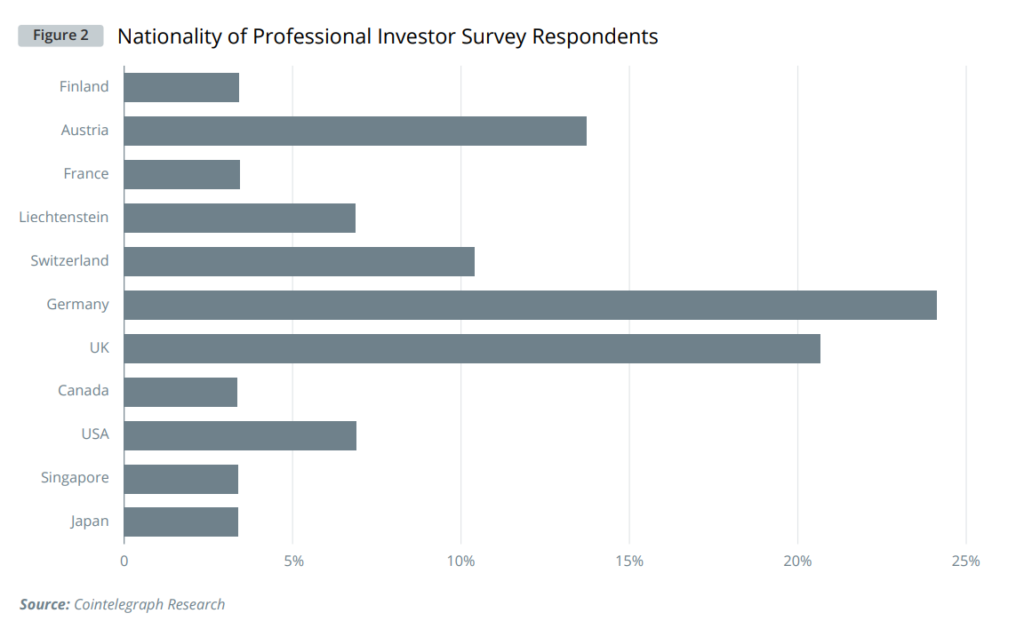
The survey was delivered via email to 6,004 registered professional investors with the financial market authority in 11 countries: Japan, Singapore, the U.S., Canada, the United Kingdom, Germany, Austria, Switzerland, Liechtenstein, France and Finland. Investors were given a two-week period to respond in July 2022. 

The majority of the respondents came from Germany and the U.K., followed by Austria and Switzerland. When sorting the survey results by country, the respondents from the U.K. managed the most assets. In total, the respondents manage $316 billion in assets, 3.3% of which, or approximately $10.42 billion, is invested into cryptocurrencies. Austria’s respondents worked in firms with the highest headcount. The majority (83%) of the respondents worked in firms with fewer than 50 employees. Only one woman in charge of asset allocation decisions at her company responded to the survey compared to 81 men. The median age of the respondent was 48.8 years old.

Total institutional holdings of cryptocurrency through trusts and funds was estimated to be $62.5 billion at the end of 2021, according to CoinShares. This number does not include direct Bitcoin (BTC) holdings, worth more than $10 billion, as of March 31, 2022, or venture funding volume, worth $25.1 billion in 2021. 

Out of the 19.15 million BTC in circulation, an estimated 7.54% (1,444,201) are held by institutional investors ranging from publicly traded companies, such as Tesla, private companies, such as the insurance provider MassMutual, exchange-traded funds (ETFs), such as VanEck, and countries, such as El Salvador.

However, institutional interest is difficult to measure directly. Quantifying the largest traditional financial investors in cryptocurrencies is difficult because many institutional investors do not disclose their holdings of cryptocurrencies publicly. Furthermore, many institutional investors have indirect exposure to cryptocurrencies and blockchain technology via the stocks that they hold. Instead, surveys can be used to estimate the real magnitude of institutional cryptocurrency holdings. 

This article is an extract from the 70+ page Institutional Demand for Cryptocurrencies Survey co-published by the Crypto Research Report and Cointelegraph Consulting, written by multiple authors and supported by Flow Trader, sFox, Zeltner & Co., xGo, veve, LCX, Finoa, Lisk, Shyft, Bequant, Phemex, GMI.
Institutional Investors show interest in Cryptocurrencies

0

The institutions are here, and they are buying the dip. Cointelegraph’s second annual survey found that 62% of professional investors currently hold digital assets (43%) or plan to buy them in the future (19%).

Blackrock, the largest asset manager in the world with $10 trillion in assets, just announced its second blockchain ETF, one month after the debut of its first one. Goldman Sachs took on principal risk in a crypto OTC trade for the first time with Galaxy Digital. Goldman Sachs now has a part of its website dedicated to the investment case for cryptocurrencies and the metaverse. The largest hedge fund in the world with $140 billion in assets under management, Bridgewater Associates, announced they were backing a Bitcoin fund. Fidelity is weighing a plan to allow its brokerage customers—some 34.4 million individual investors—to trade the world’s largest cryptocurrency. Citadel, Brevan Howard, Investment Bank Cowen—soon, the list of institutional investors in crypto will be longer than the list not involved. Not only will these institutions bring liquidity to the cryptocurrency space, but they also hold significant power in local politics and governments. Finance, insurance, and real estate lobbyist groups in the US spent $539 million in 2020 on influencing regulation and public policy. 

As institutions join the blockchain ecosystem, the demand for institutional-grade infrastructure is growing. The largest global banks, including JPMorgan Chase, Bank of America, and DBS Bank, amongst others, have invested in educating themselves on the topic of digital assets, and many are already venturing into offering products and services.

The entire technology stack from traditional finance is integrating the necessary tools to handle cryptocurrencies. There are custodian banks, market makers, paying agents, and clearing houses that are establishing themselves as trusted intermediaries for blockchain-based assets.

However, some key questions remain. How much of the cryptocurrency market capitalization and daily trading volume is done by institutions versus retail investors? The answer to this question helps us understand if crypto is mainly a retail phenomenon or if institutions already own a considerable chunk of the market. This report investigates the direction of the capital flow. Are professional traders currently buying or selling Bitcoin? Are institutions primarily interested in Bitcoin, Ethereum, or some other method for gaining exposure to blockchain technology, such as private equity or mergers and acquisitions? Do they plan to increase their exposure to blockchain over the next 12 months? 

To answer these questions, Cointelegraph Research took a data-driven approach in the second annual Institutional Demand for Cryptocurrencies Global Survey 2022 Report. To gain a deeper understanding of how professional investors feel about blockchain assets, this 60+ page research report presents 32 questions about crypto assets answered by 84 wealthy investors across Asia, the US, and Europe.

This article is an extract from the 70+ page Institutional Demand for Cryptocurrencies Survey co-published by the Crypto Research Report and Cointelegraph Consulting, written by multiple authors and supported by Flow Trader, sFox, Zeltner & Co., xGo, veve, LCX, Finoa, Lisk, Shyft, Bequant, Phemex, GMI.