



So, you’re curious about crypto ETFs in India, huh? It’s a pretty interesting topic right now. Think of it like this: instead of buying actual Bitcoin, which can feel a bit complicated, you can buy a fund that holds Bitcoin. It’s like buying a basket of Bitcoin. This whole idea is becoming a bigger deal, especially after what happened in the US. But for us in India, it’s not quite as straightforward. There are rules, different ways to invest, and some things to watch out for. Let’s break down what this cryptocurrency ETF in India situation really means for investors.
Key Takeaways
- Investing in Bitcoin ETFs in India isn’t direct; you typically use schemes like the Liberalized Remittance Scheme (LRS) to invest in international ETFs, with limits like $250,000 per financial year.
- India’s regulatory stance on cryptocurrencies is still developing, with past bans and recent tax implementations creating an uncertain environment for crypto ETFs.
- While direct ownership of Bitcoin offers full control, Bitcoin ETFs provide easier access and diversification without the complexities of managing private keys and wallets.
- Factors like global market demand, regulatory news, and general investor feelings significantly influence the performance of crypto ETFs, which can then affect their conversion rate to Indian Rupees.
- Indian retail investors face limitations, like LRS caps, and need to understand potential tax implications and monitor exchange rate dynamics when investing in crypto ETFs.
Understanding The Cryptocurrency ETF Landscape In India
Defining Exchange-Traded Funds
Exchange-Traded Funds, or ETFs, are a type of investment fund that’s traded on stock exchanges, much like individual stocks. They typically hold assets such as stocks, bonds, or commodities. The key idea behind an ETF is to track the performance of a specific index, sector, or asset class. This means that if the index goes up, the ETF’s value generally goes up too, and vice versa. ETFs offer a way to get exposure to a basket of assets without having to buy each one individually. This diversification is a big draw for many investors.
The Mechanics of Bitcoin ETFs
When we talk about Bitcoin ETFs, we’re essentially talking about funds that hold Bitcoin as their primary asset. Instead of buying Bitcoin directly, which involves setting up digital wallets and managing private keys, investors can buy shares of a Bitcoin ETF. The ETF issuer buys and holds the actual Bitcoin, and the ETF shares represent ownership in that pool of Bitcoin. When you buy a share of a Bitcoin ETF, you’re indirectly owning a piece of the Bitcoin held by the fund. The price of the ETF shares is designed to closely follow the market price of Bitcoin. This structure aims to simplify the process of investing in Bitcoin for a broader audience.
Distinguishing ETFs from Direct Bitcoin Ownership
There are some pretty big differences between owning Bitcoin directly and investing in a Bitcoin ETF. With direct ownership, you have complete control over your Bitcoin. You hold your private keys, and you can move your Bitcoin around as you please. It’s like holding physical gold. However, this also means you’re responsible for security, and if you lose your keys, you lose your Bitcoin. It can also be a bit of a hassle to buy, sell, and store. On the other hand, a Bitcoin ETF offers a more traditional investment approach. You buy shares through a brokerage account, and you don’t have to worry about wallets or private keys. The ETF provider handles the custody and management of the underlying Bitcoin. This makes it easier for many people to get involved, but you don’t have direct control over the actual Bitcoin. You’re essentially trusting the ETF provider to manage the asset on your behalf.
Navigating The Evolving Regulatory Framework

Historical Regulatory Stance on Cryptocurrencies
India’s journey with cryptocurrencies has been a bit of a rollercoaster, marked by caution and evolving policies. For a significant period, the Reserve Bank of India (RBI) maintained a rather strict stance. A notable instance was the 2018 directive that effectively barred banks from facilitating cryptocurrency transactions. This move created a substantial hurdle, isolating crypto from the mainstream financial system and making it difficult for individuals and businesses to engage with digital assets. It wasn’t until a landmark Supreme Court ruling in 2020 that this banking restriction was overturned. This decision was a turning point, injecting new life into the Indian crypto ecosystem and paving the way for numerous startups to emerge.
More recently, the government introduced a 30% tax on profits derived from cryptocurrency investments, alongside a 1% Tax Deducted at Source (TDS) applied to every transaction. This fiscal measure aimed to bring crypto activities into the formal tax net. Further developments occurred in late 2023 when the Financial Intelligence Unit (FIU) began issuing notices to several offshore crypto exchanges. These exchanges were flagged for operating within India without the necessary regulatory approvals and for not adhering to anti-money laundering protocols. The FIU even went as far as requesting the Ministry of Electronics and Information Technology (MeitY) to block the websites of these non-compliant exchanges.
Current Status of Bitcoin ETFs in India
As of now, the landscape for Bitcoin ETFs in India is still taking shape. Unlike some other major economies where Bitcoin ETFs have been approved and are trading, India is in a different phase. The regulatory bodies are still evaluating the implications and frameworks required for such products. This means that direct access to Bitcoin ETFs within India, similar to what might be found in the US or Europe, is not yet a reality.
The absence of domestically listed Bitcoin ETFs means that Indian investors looking to gain exposure through this route often have to consider international markets or alternative investment vehicles. This situation highlights the ongoing development of India’s approach to digital asset investment products.
The Evolving Regulatory Landscape for Crypto ETF in India
The regulatory environment surrounding cryptocurrencies and, by extension, crypto ETFs in India is dynamic. It’s not a static picture but rather a continuously developing one, with various government departments and financial watchdogs actively assessing the situation. This means that the rules and guidelines can change, impacting how crypto assets and related investment products are treated.
Here are some key aspects of this evolving framework:
- Policy Assessment: Regulatory bodies are continuously studying the potential benefits and risks associated with cryptocurrencies and ETFs. This includes looking at investor protection, financial stability, and the potential for illicit activities.
- International Benchmarking: Indian regulators are likely observing how other countries are handling crypto ETFs, learning from their experiences and adapting best practices.
- Taxation Framework: While general tax laws apply, specific clarifications or new regulations pertaining to crypto ETFs might be introduced to address unique aspects of these investments.
- Compliance Requirements: Any future approval of crypto ETFs would likely come with stringent compliance and reporting requirements for issuers and exchanges to ensure market integrity.
Investment Avenues For Indian Investors
For folks in India looking to get a piece of the Bitcoin ETF action, the current options aren’t exactly right on our doorstep. Since Indian exchanges haven’t listed these yet, we have to look a bit further afield. It’s not as simple as buying a stock on the NSE or BSE, but there are definitely ways to do it.
Utilizing The Liberalized Remittance Scheme
The Reserve Bank of India (RBI) has this thing called the Liberalized Remittance Scheme, or LRS for short. Basically, it lets individuals send money out of India for certain things, including investing in foreign markets. Right now, you can send up to $250,000 USD per person each financial year. This is a pretty big deal because it means you can use that money to buy Bitcoin ETFs that are listed on exchanges in places like the United States. It’s a regulated way to do it, but you’ve got to stick to the rules.
- Stay within the LRS limit: Don’t send more than $250,000 USD in a year for these investments.
- KYC is a must: You’ll need to prove who you are to the bank or financial institution you use for the transfer.
- Watch the exchange rate: The value of your investment will change based on how the Indian Rupee is doing against the US Dollar.
This scheme is the main way for individuals to invest abroad, but it needs careful planning to make sure it fits your financial plans and follows all the rules.
Exploring International Brokerage Accounts
Another route is to open an account with a brokerage firm that operates internationally. Lots of these companies let people from India open accounts and trade on foreign stock markets. This can give you access to a wider range of investment products, and sometimes the fees are lower than other methods. However, it’s super important to do your homework on these international brokers. You need to check if they’re reputable, if they follow the rules, and what their fee structure looks like before you put any money in.
Assessing Domestic Platform Offerings
While you can’t buy crypto ETFs directly on Indian exchanges today, things are always changing. As regulators get more comfortable with digital assets, we might see Indian platforms start offering these kinds of investments. Some Indian platforms already help people invest in international markets or offer other ways to invest in digital assets. It’s a good idea to keep an eye on what the Securities and Exchange Board of India (SEBI) and other government bodies are saying. You never know when a new option might pop up right here at home.
Factors Influencing Crypto ETF Performance
When we think about how crypto ETFs might perform, it’s not just about the price of the underlying digital asset. A bunch of different things can push their value up or down. It’s a bit like a complex recipe where many ingredients affect the final taste.
Global Market Demand and Investor Sentiment
The worldwide interest in cryptocurrencies, especially Bitcoin, is a big one. If lots of people globally are buying, the price of Bitcoin tends to climb. This increased demand naturally affects the value of ETFs that hold Bitcoin. Conversely, if there’s a lot of selling happening everywhere, the ETF’s value will likely drop. It’s a pretty direct connection, really. The sheer volume of trading activity on international exchanges sets the baseline for what Indian investors might see. Global market demand plays a massive role.
Investor sentiment, or how people feel about crypto, is another major driver. Positive news, like technological breakthroughs or endorsements from well-known figures, can create excitement, leading to more buying. Bad news, such as security breaches or negative comments from regulators, can cause people to sell quickly. Beyond just crypto-specific feelings, broader economic conditions matter too. Things like inflation, interest rate changes, and the general health of the global economy can influence where investors put their money, sometimes shifting funds away from riskier assets like crypto ETFs.
Regulatory Developments and Policy Shifts
Regulations, or the lack of them, are a huge deal. In India, the stance of bodies like the Reserve Bank of India (RBI) and the Securities and Exchange Board of India (SEBI) can really shape how these ETFs perform. If rules become clearer and more supportive, it could encourage more investment and boost performance. On the other hand, any uncertainty or restrictive policies could dampen enthusiasm and negatively impact prices. It’s a constant balancing act between new ideas and oversight.
Here’s a look at how regulatory shifts can impact performance:
- Increased Clarity: When regulations are clear and favorable, it can attract more institutional investors and boost confidence, potentially leading to higher ETF prices.
- New Restrictions: Unexpected bans or strict rules can cause sharp declines in ETF values as investors pull out.
- International Policies: Decisions made by regulators in major markets like the US or Europe can also have ripple effects on global crypto prices and, consequently, on ETFs available to Indian investors.
The evolving nature of cryptocurrency regulation means that investors need to stay informed about policy changes both domestically and internationally, as these can significantly alter the investment landscape for crypto ETFs.
Currency Fluctuations and Exchange Rate Dynamics
When you invest in an ETF that’s priced in a foreign currency, like the US dollar, you’re exposed to exchange rate changes. If the Indian Rupee weakens against the dollar, your investment could be worth more when converted back. However, if the Rupee strengthens, your returns might be less. This adds another layer of risk and potential reward that’s separate from the crypto’s actual performance. It’s important to keep an eye on both the crypto market and the currency markets when considering these types of investments.
Here are some key points regarding currency:
- USD/INR Exchange Rate: The daily movement of this pair directly impacts the INR value of USD-denominated crypto ETFs.
- Hedging Strategies: Some ETFs might offer currency hedging, but this often comes with additional costs.
- Long-Term Trends: Persistent currency trends can significantly affect long-term returns, regardless of the ETF’s underlying asset performance.
Challenges And Considerations For Retail Investors
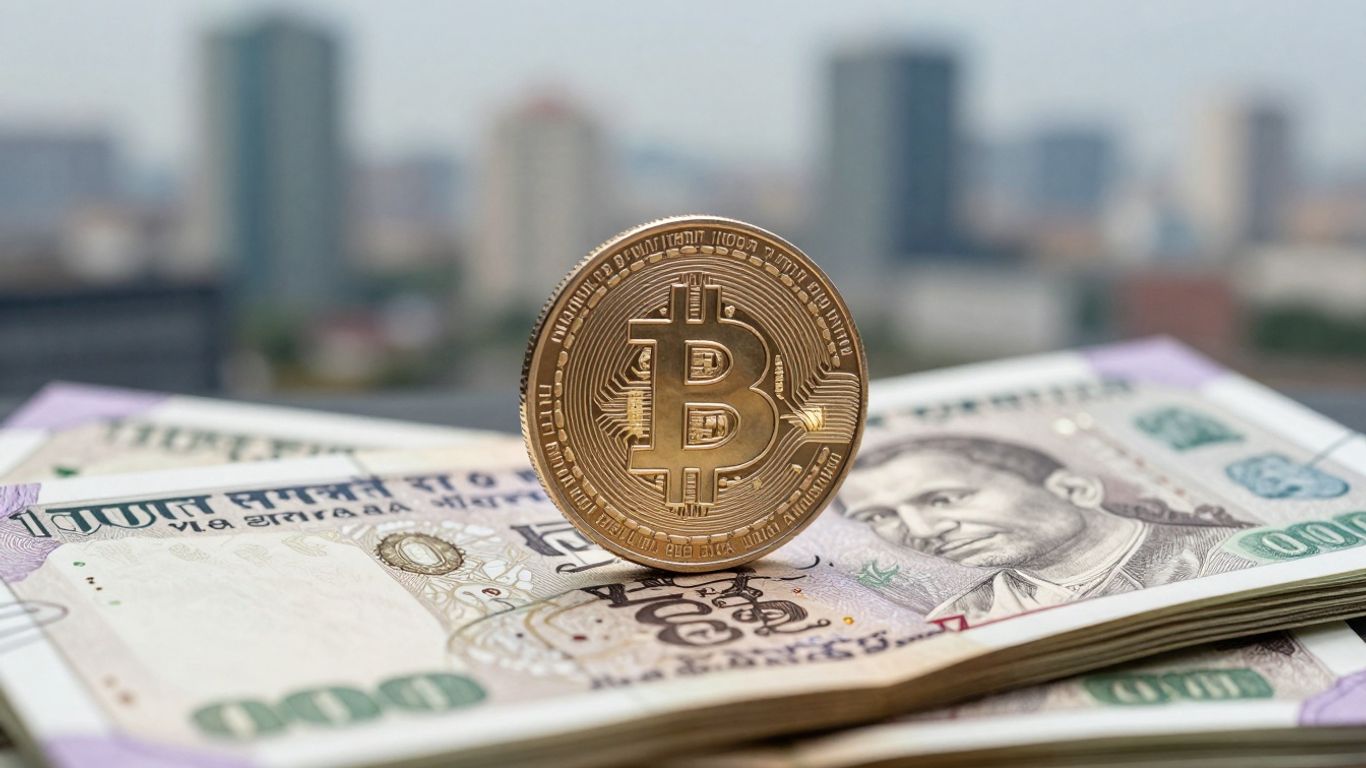
Even though the idea of crypto ETFs in India sounds promising, there are definitely some hurdles to jump over. For regular folks wanting to invest, the biggest thing is the money limit. The Reserve Bank of India has a cap on how much you can send abroad each year for investments, and that applies here too. So, you can’t just pour unlimited money into these things.
Navigating Retail Investor Limitations
Right now, Indian investors looking at Bitcoin ETFs often have to go through international brokerage accounts or use schemes like the Liberalized Remittance Scheme (LRS). This isn’t as straightforward as buying a stock on the local exchange. There are forms to fill out, limits to keep in mind, and you’re dealing with foreign platforms which can be a bit intimidating. Plus, the LRS limit, while generous for some, might not be enough for serious investors wanting to allocate a significant portion of their portfolio to crypto ETFs.
Understanding Tax Implications
Figuring out the taxes on crypto ETF gains in India is still a bit murky. While the general idea is that profits will be taxed like capital gains, the specifics can change. It’s not as clear-cut as taxes on mutual funds or stocks. You’ll likely need to keep good records of your transactions and consult with a tax advisor to make sure you’re compliant. This uncertainty can make investors hesitant.
Monitoring Conversion Rate Dynamics
When you invest in a US-listed Bitcoin ETF, you’re dealing in US dollars, but you’re an Indian investor. This means you have to think about the exchange rate between the US dollar and the Indian Rupee. The value of your investment can go up or down not just because of Bitcoin’s price, but also because of how the rupee is doing against the dollar. This adds another layer of complexity to tracking your returns.
Investing in crypto ETFs from India involves more than just picking a fund. You’ve got to consider the money you can send out, how taxes will work, and how currency changes might affect your final earnings. It’s a multi-layered decision process.
The Future Outlook For Crypto ETFs In India
Potential Impact on Investment Diversification
Adding crypto ETFs to your investment mix could really shake things up, in a good way. Think about it: most of your investments might be in stocks and bonds, which tend to move together. Cryptocurrencies, on the other hand, often do their own thing. So, when the stock market is having a rough time, a crypto ETF might be holding steady or even going up. This can help smooth out the bumps in your overall portfolio. It’s like having different kinds of insurance for your money, making it less likely that everything tanks at once.
Anticipated Regulatory Clarity
Right now, the rules around crypto in India are still being figured out. It’s not a super clear picture, and that can make people hesitant. But as crypto ETFs become more common around the world, our own regulators are watching closely. They’re likely going to start making clearer rules, probably leaning towards what other countries are doing. This would make things much easier for investors and companies alike. Clearer regulations mean less guesswork and more confidence for everyone involved.
Opportunities Presented by Crypto ETF in India
Crypto ETFs offer a simpler way for everyday people in India to get a piece of the digital asset pie. Instead of dealing with complicated crypto wallets and exchanges, you can buy these ETFs through your regular stockbroker. It’s much more familiar territory. Plus, as these ETFs become more established, we might see big financial institutions start investing, which could bring more money and stability to the market. It’s a sign that digital assets are becoming a more accepted part of the financial world.
- Simplified Access: Buy crypto exposure through familiar brokerage accounts.
- Portfolio Diversification: Add an asset class that often moves independently of traditional markets.
- Potential for Growth: Benefit from the increasing acceptance and potential institutional investment in digital assets.
The journey of crypto ETFs in India is still unfolding. While direct access might take time, the global trend suggests a growing acceptance. Investors should stay informed about regulatory shifts and market developments to make sound decisions.
Looking Ahead: The Road for Crypto ETFs in India
So, what’s the main takeaway here? Crypto ETFs are a pretty big deal on the global stage, and while India is still working out the details, there are definitely ways for people here to get involved. Mostly, this means using programs like LRS to invest in ETFs listed elsewhere, like in the US. It’s not exactly a walk in the park, and you really need to pay attention to taxes and how currency values change. Plus, let’s be honest, crypto is still a bit of a wild ride. Before you jump in, it’s a good idea to do your homework, maybe talk to someone who knows the ropes, and only put in money you’re okay with potentially losing. It’s a new kind of investment world out there, and with a bit of careful thought, you might just find some interesting new paths for your money.
Frequently Asked Questions
What exactly is a Bitcoin ETF?
Think of an ETF like a special basket that holds a bunch of something. A Bitcoin ETF is a basket that holds Bitcoin or things related to Bitcoin. You can buy a piece of this basket on a stock market, kind of like buying a share of a company. It’s an easier way to invest in Bitcoin without actually owning the digital coins yourself.
Can I buy Bitcoin ETFs easily in India?
Right now, you can’t buy Bitcoin ETFs directly from Indian stock markets. However, Indian investors can invest in Bitcoin ETFs that are available in countries like the US. You can do this using a special program called the Liberalized Remittance Scheme (LRS), but there are limits on how much you can send out of India each year for these kinds of investments.
How is buying a Bitcoin ETF different from buying Bitcoin directly?
When you buy Bitcoin directly, you own the actual digital coin and have to keep it safe in a digital wallet. It’s like having your own money. When you buy a Bitcoin ETF, you’re buying a share in a fund that owns Bitcoin. It’s more like investing in a company that owns gold, rather than owning the gold yourself. ETFs are usually easier to manage and are more regulated.
Are Bitcoin ETFs legal and regulated in India?
The rules for crypto in India are still being figured out, so it’s not completely clear yet. While Bitcoin ETFs are available in other countries and can be accessed by Indians through specific schemes, they aren’t directly listed or fully regulated by Indian authorities in the same way as local stocks or mutual funds.
What affects the price of a Bitcoin ETF?
The price of a Bitcoin ETF goes up and down based on a few things. The main one is the price of Bitcoin itself. Also, how much people want to buy or sell the ETF, and any new rules or news about crypto can change its price. Since you’re investing from India, the exchange rate between the Indian Rupee and the US Dollar also plays a role.
What are the risks for Indian investors in Bitcoin ETFs?
For Indian investors, there are a few things to watch out for. You might be limited by how much money you can send overseas each year. Also, the value can change because of the exchange rate between rupees and dollars. Plus, since the rules in India are still changing, there’s always a chance of new regulations affecting your investment.