

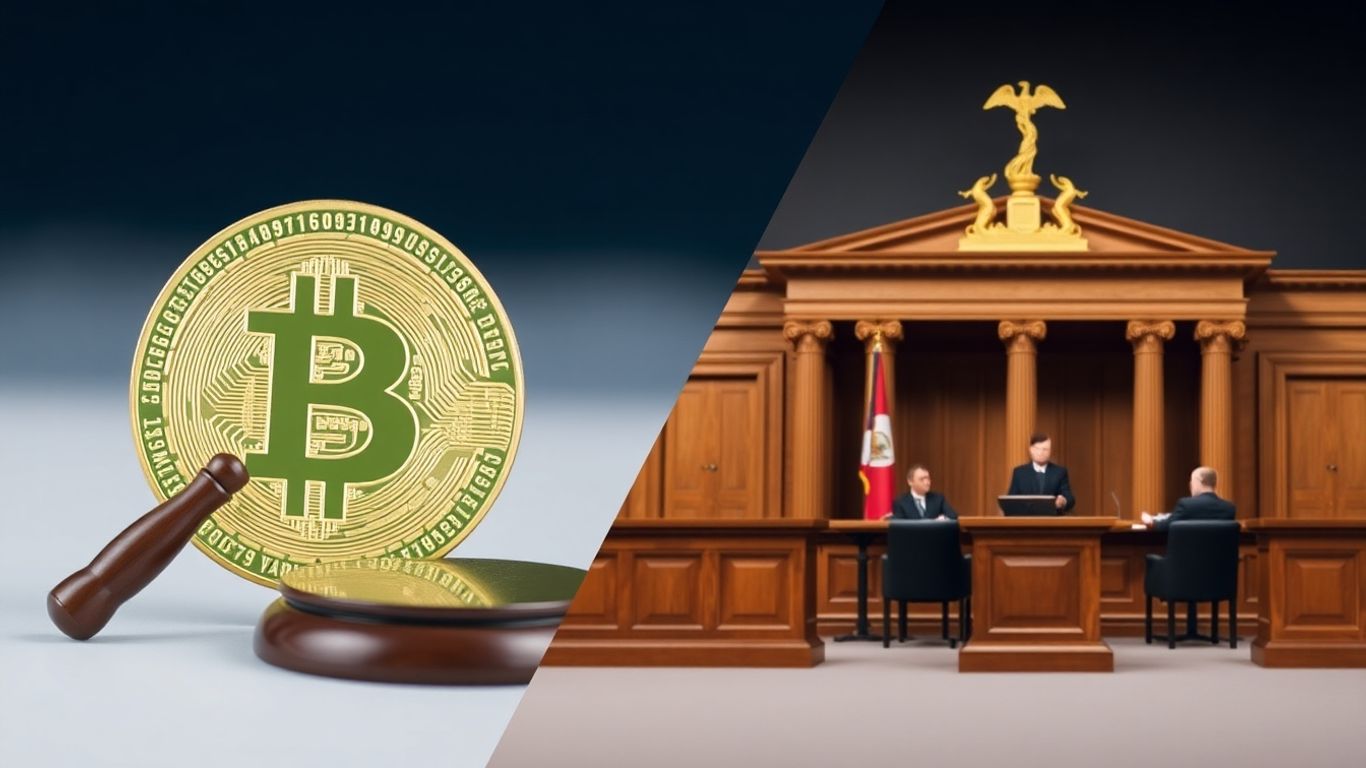


So, is crypto considered a security in the US? It’s a question that’s been buzzing around the financial world for a while now, and honestly, the answer isn’t always a simple yes or no. The folks at the SEC have their own way of looking at things, and it all boils down to how a digital asset is presented and used. We’re going to break down the legal tests, look at some big cases, and figure out what this all means for businesses and investors trying to make sense of it all.
Key Takeaways
- The SEC uses the Howey Test to decide if a crypto asset is an investment contract, and therefore a security. This means looking at whether people invest money, expect profits, and if those profits come mostly from others’ work.
- Major legal cases, like the ones involving The DAO and Ripple Labs, have set precedents and shown how the SEC applies its rules to digital assets, though debates continue.
- There’s ongoing discussion about whether crypto is a commodity (like gold, regulated by the CFTC) or a security (regulated by the SEC), especially with altcoins and stablecoins.
- Businesses dealing with crypto need to be aware of SEC rules, including disclosure requirements for token sales and how to handle digital assets in financial reports.
- The regulatory landscape for crypto is always changing, with new laws and court decisions constantly shaping how digital assets are treated in the US.
Understanding the SEC’s Framework for Digital Assets
So, the SEC, right? They’re the folks in charge of making sure the stock market and other financial stuff is on the up-and-up. When it comes to crypto, they’ve got a whole system for figuring out if a digital coin or token is actually a security. This is a big deal because if it is, it means a whole bunch of rules apply, kind of like how they regulate stocks.
The Howey Test: A Foundational Legal Standard
This is the main tool the SEC uses. It’s not new; it comes from a Supreme Court case way back in 1946. Basically, for something to be considered an "investment contract" – and therefore a security – it has to meet four conditions:
- An investment of money.
- In a common enterprise (meaning people pool their money together).
- With an expectation of profits.
- Profits that come mostly from the work of others (like the people running the company or project).
If a crypto project looks like it ticks all these boxes, the SEC is likely to say, "Yep, that’s a security."
Defining Securities Under the Securities Act of 1933
The law itself, the Securities Act of 1933, is pretty broad about what counts as a security. It lists things like stocks, bonds, and notes. But it also includes "investment contracts." This catch-all phrase is where crypto often gets tricky. The SEC looks at the substance of the deal, not just what it’s called. So, even if it’s called a "token" and not a "stock," if it acts like one, it might be treated as one.
SEC’s Interpretation of Investment Contracts in Crypto
When the SEC looks at a crypto offering, they’re really asking: did people buy this digital asset hoping to make money, and was that hope based on the efforts of the people who created or manage the project? If the answer is yes, it’s a strong indicator that it’s an investment contract. They’ve used this logic in many cases, like with initial coin offerings (ICOs) where projects sold tokens to raise money, promising future growth or utility that depended on the team’s work.
The SEC’s approach isn’t about stifling innovation; it’s about investor protection. They want to make sure that when people put their money into something that promises a return, they have the same basic protections they’d have if they were buying stock.
It’s a bit like this: imagine you buy a ticket to a play. If the play is good and the actors are great, you might feel like you got your money’s worth. But if the actors don’t show up, or the play is a mess because the director didn’t do anything, you’d probably feel ripped off. The SEC wants to prevent that feeling when it comes to financial investments, especially when the success relies heavily on someone else’s performance.
Key Enforcement Actions and Precedents
Landmark Cases Shaping Regulatory Interpretation
The Securities and Exchange Commission (SEC) has used several high-profile cases to clarify its stance on digital assets. These legal battles have set important precedents, guiding how both regulators and the industry view cryptocurrencies. The Howey Test, a Supreme Court ruling from 1946, remains the bedrock for determining if an asset is an investment contract, and thus a security. The SEC applies this test to digital assets, looking for an investment of money in a common enterprise with an expectation of profits derived from the efforts of others. This has led to numerous enforcement actions.
The DAO Report and Its Lasting Impact
In 2017, the SEC released a report on "The DAO" (Decentralized Autonomous Organization). This was a significant moment because it was one of the first times the SEC formally applied the Howey Test to a digital asset. The DAO was a decentralized venture fund built on the Ethereum blockchain, and its tokens were sold to investors. The SEC concluded that these DAO tokens were securities. This report made it clear that even decentralized projects could fall under securities regulations if their tokens met the criteria of an investment contract. It sent a strong signal to the crypto industry about the potential for regulatory oversight.
Ripple Labs and the Ongoing Classification Debate
The case involving Ripple Labs and its XRP token is another major development. The SEC sued Ripple, alleging that XRP was an unregistered security. The legal proceedings have been lengthy and complex, with different court rulings offering varying interpretations. While some rulings have sided with Ripple, suggesting that certain XRP sales did not constitute securities offerings, the overall classification remains a subject of debate and appeals. This ongoing saga highlights the challenges in applying existing securities laws to novel digital assets and the significant impact these cases have on market participants and the broader regulatory landscape.
Jurisdictional Tensions: Commodities Versus Securities

The CFTC’s Role in Digital Asset Oversight
The Commodity Futures Trading Commission (CFTC) generally oversees commodities and their associated derivatives. Think futures contracts or options. For digital assets like Bitcoin and Ether, which many see as commodities, the CFTC has a clearer path for oversight, especially concerning futures markets. Their main job is to keep these markets fair and free from manipulation, as laid out in the Commodity Exchange Act. They’ve taken action against platforms that didn’t follow the rules, like the BitMEX case where they settled for $100 million over operating an unregistered platform and lacking proper anti-money laundering checks. The CFTC can also step in if fraud in the spot market, where assets are traded directly, could mess with the derivatives market.
Navigating the Gray Areas of Altcoins and DeFi Tokens
Things get a lot murkier when we talk about newer digital assets, often called altcoins, or tokens used in decentralized finance (DeFi). The line between a commodity and a security can get blurry here. The CFTC has suggested that a large chunk of digital assets out there might actually be commodities. However, the Securities and Exchange Commission (SEC) often looks at these same tokens and sees them as potential securities, especially if people buy them expecting to make a profit. This disagreement leads to a lot of uncertainty.
- Utility Tokens: These are meant to give access to a service or product within a specific blockchain network. The idea is they aren’t bought primarily for profit, but their classification can still be debated.
- DeFi Tokens: Tokens powering decentralized finance applications can be complex. Their function might seem like a commodity, but their distribution and marketing can sometimes resemble a security offering.
- Security Tokens: These are designed from the start to represent ownership or debt, making them clearly fall under SEC rules if they meet the criteria.
The ongoing debate over whether a digital asset is a commodity or a security creates significant hurdles for businesses. It’s not just about which agency has authority; it’s about understanding the specific rules and compliance requirements that apply to each classification, which can differ dramatically.
Stablecoins: A Complex Regulatory Landscape
Stablecoins, like Tether or USD Coin, add another layer of complexity. They’re designed to maintain a stable value, often pegged to a fiat currency. The CFTC has indicated they might view some stablecoins as commodities. But the SEC has also raised concerns, suggesting that if a stablecoin is marketed in a way that suggests investors will profit, it could be considered an investment contract, and thus a security. This has led to a back-and-forth. For example, the SEC dropped an investigation into Binance USD (BUSD), concluding it wasn’t a security. This shows how difficult it is to apply old rules to new digital money. In 2024, the House of Representatives even voted on a bill aiming to give the CFTC more power over spot markets for major cryptocurrencies like Bitcoin, while keeping security tokens under the SEC. This kind of legislative effort highlights the need for clearer rules.
| Agency | Primary Focus | Digital Asset View (General) | Key Concerns |
|---|---|---|---|
| CFTC | Commodities & Derivatives | Often views major cryptos (BTC, ETH) as commodities | Market manipulation, fraud in derivatives, fair spot markets |
| SEC | Securities | Views many altcoins/ICOs as potential securities | Investor protection, unregistered offerings, disclosure requirements |
Regulatory Considerations for Businesses
For any business involved with digital assets, understanding and adhering to regulatory requirements is not just a good idea, it’s a necessity. The U.S. Securities and Exchange Commission (SEC) has been quite active in this space, and if your digital asset is deemed a security, a whole host of obligations kick in. This means companies need to be really careful about how they structure their operations and communications.
Disclosure Requirements in SEC Filings
When a company holds or transacts with digital assets, especially if those assets are classified as securities, transparency in financial reporting is key. This involves more than just listing the assets; it means disclosing the risks associated with them. The SEC expects businesses to detail potential issues in their filings, particularly in the "Risk Factors" section. These risks can include:
- Regulatory Uncertainty: The landscape is always changing, with new rules and enforcement actions popping up. Companies need to acknowledge this evolving environment.
- Market Volatility: Digital assets are known for their price swings. Businesses must disclose how these fluctuations could impact their financial health.
- Cybersecurity Threats: The risk of hacks and theft is a constant concern in the digital asset space, and this needs to be communicated to investors.
- Liquidity Challenges: Sometimes, it can be hard to sell digital assets quickly, especially during market downturns. This potential difficulty in converting assets to cash is another important disclosure.
Accounting for these assets also presents unique challenges. Under GAAP, companies generally can’t recognize gains on digital assets until they are sold, but they must record losses if the value drops. This can lead to inconsistencies in financial statements, making clear disclosures even more important. Accurate record-keeping and adherence to accounting standards like GAAP or IFRS are therefore paramount.
Navigating International Regulatory Complexities
Operating across borders adds another layer of complexity. Different countries have vastly different approaches to digital assets. Some might treat them as securities, others as commodities, and some may even have outright bans. Businesses engaging in international transactions must be aware of and comply with multiple regulatory frameworks. This includes adhering to Anti-Money Laundering (AML) and Know Your Customer (KYC) rules, which can vary significantly from one jurisdiction to another. Failing to do so can lead to serious legal and financial penalties. Companies need to develop strategies that account for these global differences to avoid conflicts and ensure compliance across all operating regions. This often requires significant legal and compliance resources to stay on top of cryptocurrency laws and regulations in the USA.
Compliance Strategies for Token Issuers and Holders
For businesses that issue tokens, the primary concern is whether those tokens will be classified as securities. If a token is deemed a security, the issuer must comply with SEC registration requirements or qualify for an exemption. This process can be lengthy and expensive. Companies need to carefully assess their tokenomics and the circumstances surrounding the token’s offering to make this determination. Engaging legal counsel experienced in securities law and blockchain technology is highly recommended.
For holders of digital assets, compliance often involves maintaining secure custody of assets and ensuring accurate valuation for financial reporting. This might involve using multi-signature wallets or cold storage solutions for enhanced security. Furthermore, businesses need to establish robust internal controls. This includes implementing systems for real-time transaction tracking, maintaining detailed records, and conducting regular audits. A proactive approach, involving continuous monitoring of regulatory developments and seeking expert advice, is the most effective way to manage risks and maintain credibility in this dynamic market.
Recent Legislative and Judicial Developments
Congressional Efforts to Clarify Crypto Oversight
Lawmakers are trying to get a handle on the crypto world, and it’s a bit of a mess. Back in July 2025, the House passed a bill called the Digital Asset Market Clarity Act, or the "Clarity Act" for short. It’s now sitting with the Senate. Meanwhile, the Senate Banking Committee is looking at something called the Responsible Financial Innovation Act of 2025. An updated version of this bill came out in September 2025. These bills are attempts to draw clearer lines around digital assets, trying to figure out what’s a security, what’s a commodity, and what’s something else entirely. It’s a slow process, and not everyone agrees on the best way forward.
The Impact of Court Rulings on SEC Authority
Court cases are really shaping how the SEC deals with crypto. There are a bunch of ongoing legal fights with big token companies. What happens in these cases could set new rules for whether certain digital assets are under the SEC’s watch. If courts side with the SEC having more power, it could mean more regulation for token sales. But if rulings limit the SEC’s reach, it might push Congress to make clearer laws specifically for this industry. It’s a back-and-forth that keeps everyone guessing.
Evolving SEC Cryptocurrency Regulation
Things are definitely changing with how the SEC looks at crypto. There’s a lot of talk about new rules that could make stablecoin issuers act more like banks. They’re also looking at stricter oversight for decentralized finance (DeFi) platforms. The goal is to bring more stability and protect investors in a market that’s been pretty wild. It’s a complex puzzle, and the SEC is trying to fit the pieces together.
The push for clearer rules comes as the digital asset market continues to grow, presenting both opportunities and risks. Balancing innovation with investor protection remains the central challenge for regulators and lawmakers alike.
- Clarity Act: Passed the House in July 2025, now in the Senate.
- Responsible Financial Innovation Act: Updated version released in September 2025.
- Joint Statement: SEC and CFTC chairmen issued a joint statement on September 5, 2025, signaling a coordinated approach.
- Speeches: SEC officials have been giving speeches to explain their perspective, like Chairman Paul S. Atkins’ talk in November 2025.
The Future of Crypto Regulation and Compliance

The path forward for crypto regulation and compliance in the U.S. is still being drawn, and it’s a complex picture. Lawmakers and courts are actively working to create clearer rules, but it’s a slow process. We’re seeing proposals that could bring banking-like rules to stablecoin issuers and more oversight for decentralized finance (DeFi) platforms. The goal is to create more stability and protect investors, which is definitely needed in a market that’s seen a lot of ups and downs. This evolving landscape means businesses in the crypto space need to stay on their toes.
Court decisions are also playing a big role in how the SEC applies existing securities laws to digital assets. Ongoing legal fights could set new precedents, influencing whether certain tokens are seen as securities. If regulators get broader authority, it could mean more scrutiny on token sales. On the flip side, if their power is limited, it might push Congress to create more specific laws for the industry.
For companies involved with crypto, keeping up with these changes is key. This includes watching legislative updates, following court rulings, and working with legal experts who know SEC crypto rules and blockchain compliance. It’s also smart to improve internal controls and be more open about financial information. Doing these things helps companies get ready for what’s next and builds trust with investors.
Here are some steps businesses should consider:
- Monitor Regulatory Developments: Keep a close eye on proposed legislation and SEC statements regarding digital assets.
- Assess Token Classification: Regularly review how your digital assets might be classified under current and potential future rules.
- Strengthen Disclosure Practices: Ensure all financial reporting and investor communications are transparent and accurate regarding crypto holdings and activities.
- Engage Legal Counsel: Work with attorneys specializing in securities law and cryptocurrency to navigate compliance requirements.
The challenge lies in balancing innovation with investor protection. Striking this equilibrium is vital for the long-term health and acceptance of digital assets within the traditional financial system. Without clear guidelines, the risk of illicit activities and market instability remains a significant concern.
International operations add another layer of complexity, as different countries have vastly different approaches to classifying and regulating cryptocurrencies. Companies operating globally must navigate these varied frameworks, including anti-money laundering (AML) and know-your-customer (KYC) rules, to avoid conflicts and penalties. The future of crypto regulation and compliance is about building a framework that encourages innovation while guaranteeing consumer protection and financial transparency. This is a significant undertaking, but one that is necessary for the digital asset market to mature.
Wrapping Up the Crypto Security Question
So, is crypto a security in the US? The short answer is: it depends. The SEC, using the Howey Test, looks at whether people invest money expecting profits mainly from others’ work. If a crypto asset fits this, the SEC likely sees it as a security, meaning it has to follow strict rules. This whole area is still pretty new and messy, with ongoing court cases and new laws being talked about. Companies dealing with crypto need to pay close attention to these developments and get good legal advice. It’s not a simple yes or no, and the rules are still being written as we speak.
Frequently Asked Questions
What is the Howey Test and why is it important for crypto?
The Howey Test is like a checklist the government uses to figure out if something is an investment, like buying stocks. For crypto, it asks if you put money into something, expect to make a profit, and if that profit mainly comes from someone else’s hard work. If a crypto fits all these points, the government might say it’s a security, which means it has to follow special rules.
Why does the SEC care if crypto is a security?
The SEC (Securities and Exchange Commission) makes sure that when people invest their money, they are treated fairly and have all the important information. If crypto is a security, it means the company selling it has to be open about its business and protect investors, just like companies that sell stocks.
Are all cryptocurrencies considered securities by the SEC?
No, not all of them. Some cryptocurrencies, like Bitcoin, are often thought of more like commodities, similar to gold or oil, and are regulated differently. But many other digital coins, especially those sold in initial coin offerings (ICOs) where people expect to make money from the creators’ efforts, might be seen as securities.
What happens if a crypto is declared a security?
If a cryptocurrency is called a security, the company that created or sold it has to follow strict rules. This includes telling investors important details about their project, registering with the SEC, and not misleading people. If they don’t follow these rules, they can face big fines or other penalties.
What’s the difference between the SEC and the CFTC regarding crypto?
Think of the SEC as the referee for investments like stocks and bonds (securities), and the CFTC (Commodity Futures Trading Commission) as the referee for things like wheat or oil (commodities). For crypto, the SEC usually steps in when a digital asset looks like an investment where people expect to profit from others’ work, while the CFTC might get involved if it’s seen more like a commodity.
What should businesses doing business with crypto know about these rules?
Businesses involved with crypto need to be really careful. They must understand if their digital assets might be considered securities. If they are, they need to follow all the SEC’s rules about selling them, reporting their finances, and being honest with investors. It’s important to get good legal advice to make sure they’re doing everything correctly.