

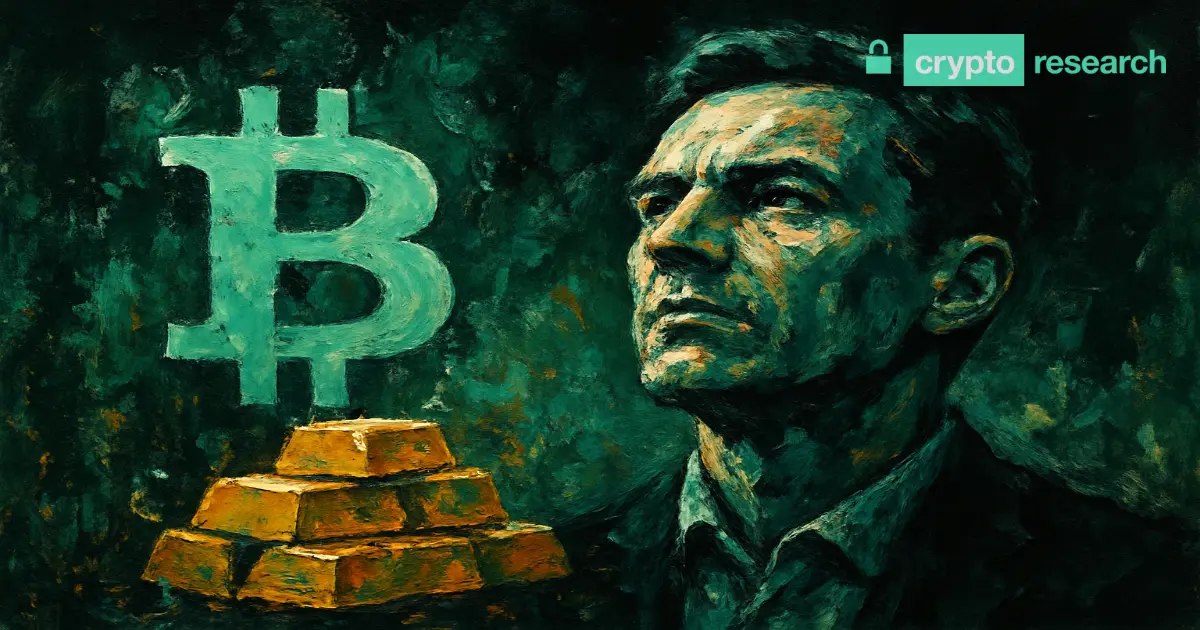


Bitcoin’s Market Potential Surges Amid Iran Conflict
Bitcoin could see its market potential soar to levels surpassing gold’s staggering $34 trillion valuation, according to Bitwise Chief Investment Officer Matt Hougan. He argues that Bitcoin’s growing acceptance as both a currency and a store of value is exemplified by recent global developments, specifically the ongoing conflict in Iran. Hougan pointed to Iran’s initiative to allow ships navigating the strategically vital Strait of Hormuz to pay tolls with cryptocurrency, highlighting Bitcoin’s emergence as a politically neutral alternative to conventional financial systems. This initiative, along with other trends, suggests that Bitcoin’s total addressable market may soon eclipse that of gold.
Context
Traditionally, investors have viewed Bitcoin chiefly as a digital store of value, often likening it to gold. However, recent geopolitical tensions, particularly those involving Iran, have illuminated the cryptocurrency’s dual potential to operate as a global currency. Iran’s consideration of accepting cryptocurrency for shipping tolls signifies a transformative shift towards the incorporation of digital currencies in international commerce. Such moves underscore Bitcoin’s increasing importance and relevance in today’s global financial landscape, prompting analysts and investors alike to reconsider its role beyond mere asset preservation.
Key Details
In earlier projections, Hougan estimated that if Bitcoin were to capture 17% of the store-of-value market over the next ten years, its price could skyrocket to $1 million per coin. He suggested that the true market value might even exceed this projection if Bitcoin fully embraces its dual function as both a store of value and a transactional medium. As of April 15, 2026, Bitcoin is trading at approximately $74,500, carrying a market capitalization of around $1.4 trillion. For comparison, gold is currently priced at $4,854 per ounce and boasts a market cap of over $33.7 trillion.
This increase in Bitcoin trading is not just a numeric anomaly; it reflects real-world economic conditions in several countries facing severe inflation. Citizens in nations like Argentina, Turkey, and Venezuela have increasingly turned to Bitcoin to safeguard their wealth from severe currency devaluation. A survey conducted by Coinbase in January revealed that an impressive 87% of Argentinians acknowledge cryptocurrency and blockchain technology as tools for enhancing their financial independence, while nearly 75% view crypto as a remedy for inflation-related problems.
Corporate engagement with Bitcoin is also gaining traction. For instance, companies tracked by BitBo collectively hold over 1.5 million Bitcoin, which is currently valued at more than $116 billion. This trend underscores a significant boost in institutional confidence in Bitcoin as a legitimate and viable asset class, reinforcing its position in the financial markets.
Implications
The multifaceted potential of Bitcoin—to function both as a store of value and as a global currency—could dramatically expand its addressable market, paving the way for it to outpace gold. This dual functionality may attract a wider array of investors and users, facilitating Bitcoin’s deeper integration into the global financial system. Furthermore, as nations increasingly explore digital currencies for international trade, Bitcoin may evolve into a crucial tool for economic stability and growth, marking a transformative phase in how currency is perceived and utilized worldwide.
Outlook
As Bitcoin’s role in the financial ecosystem continues to evolve alongside its adoption for both preservation of value and transactional uses, key trends are anticipated to drive market dynamics in the coming years. Significant areas to monitor include enhanced institutional adoption, progress in regulatory frameworks, and a larger integration of Bitcoin within international financial systems. Each of these factors will play a crucial role in shaping Bitcoin’s trajectory and its overarching potential to redefine the future of finance on a global scale.